Why Optimizing One Part Can Break the Whole System
In both engineering and business strategy, there is a dangerous temptation: Local optimization.
We see a friction point in one department, one project, or one specific machine, and we obsess over fixing it in isolation. We make that specific gear spin faster. We push that one sales team to double their numbers. But this isolated improvement does not always bring the expected outcome, does it?
There is one principle to take into account here:
«Optimizing a part can damage the whole system»
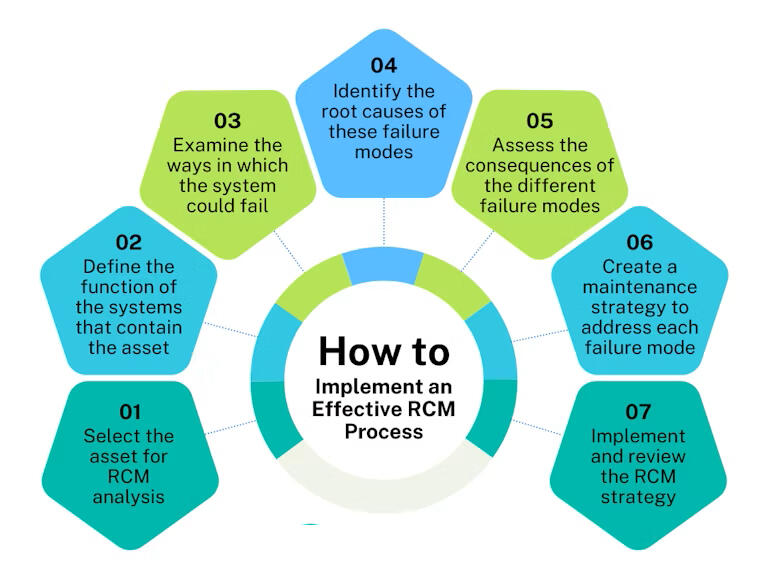
It comes from Reliability Centered Maintenance (RCM). While RCM is traditionally used to keep complex industrial assets running, it might also be considered as one of the most effective mental models for organizational leadership.
Here is how to apply the «Systems View» of RCM to your business strategy.
1. Context is King (Define the Function)
In the RCM cycle, you cannot maintain an asset until you define exactly what it is supposed to do.
In business, we often skip this. We try to «optimize» a team without asking how their increased output affects the downstream flow. If you optimize Marketing to generate 1.000 leads, but Operations can only onboard 500 clients, you have not created efficiency: You have created a bottleneck.
The Leadership shift: Before greenlighting an optimization project, the following question might save an important amount of resources: Does maximizing this metric support the overall system, or does it stress-test a weaker link elsewhere?
2. Radical Honesty About Risk (Failure Modes)
How exactly could this break, and what is the root cause?
In the boardroom, we often settle for optimism. In engineering, optimism is a liability. When scaling a business unit or entering a new market, we must identify the root causes of potential failure, and not just the symptoms.
Symptom: «We missed the deadline.»
Root Cause: We optimized for feature quantity (Development) rather than integration stability (QA).
3. Strategy is a Loop, Not a Line
The RCM shows a circle for a reason. After implemeting and reviewing iy, you must get right back to Step 1.
A static strategy is a dead strategy. The market changes, technology shifts, and your internal capabilities evolve. The «maintenance strategy» for your business must be reviewed constantly. What worked to get you from A to B will likely be the exact mechanism that breaks your system when you try to reach C.
The Bottom Line
True reliability (whether in a robotic arm on a production line or in an international expansion plan) never comes from looking at the squeaky wheel in isolation. It comes from looking at the whole.
Our challenge: Look at your current «problem child» project or department and not focus on just fixing the part but optimizing the whole system.