
Unfolding the Caribbean
When we think of the Caribbean, our minds naturally go to crystal-clear waters, tourism, and relaxation. But if we look at this region through a strategic and geopolitical lens, a very different picture emerges.
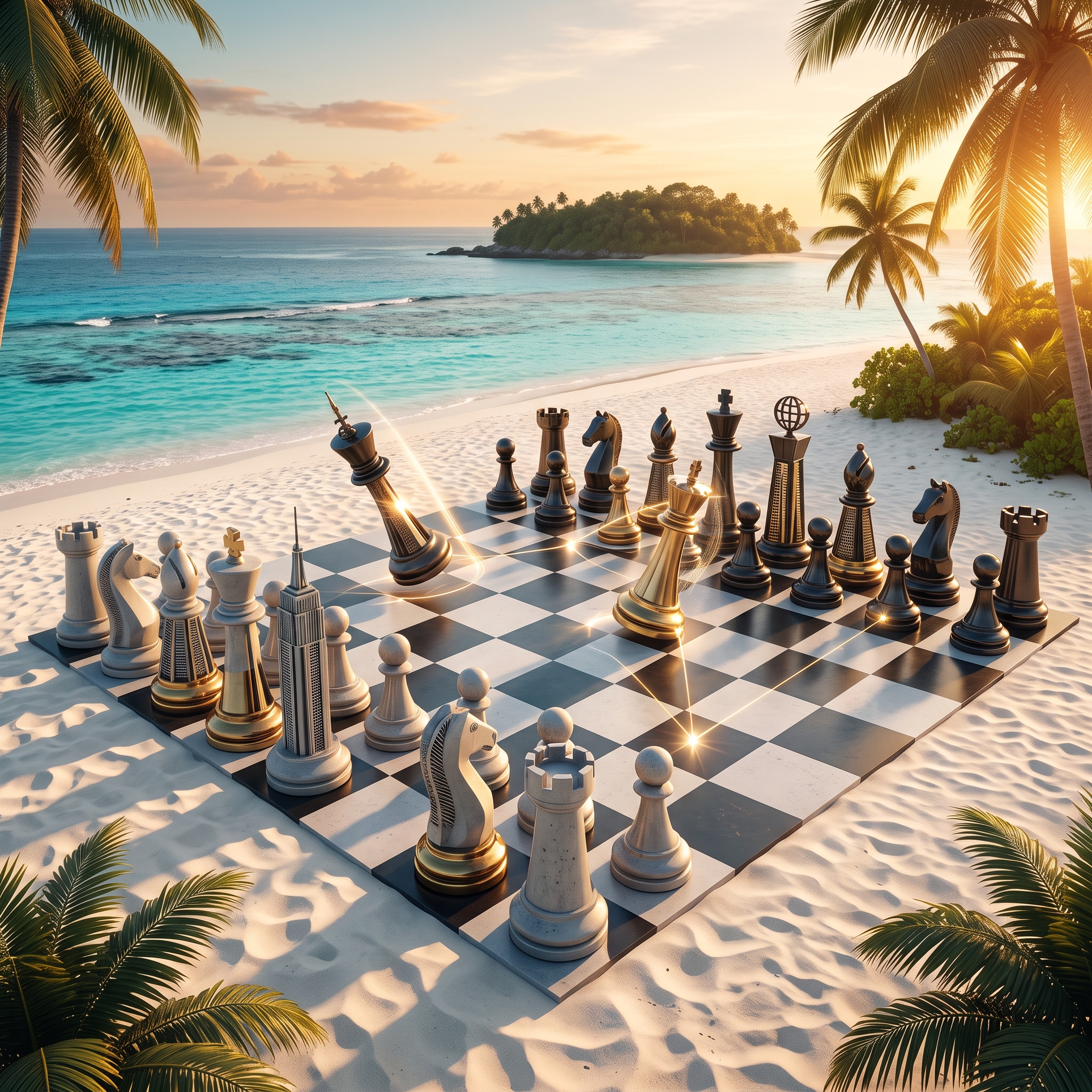
These islands are currently the stage for a high-stakes chessboard involving global superpowers. For over a century, the Caribbean has lived in the shadow of a terrestrial giant: the United States. With Cuba just 150 kilometers from Florida and the Bahamas even closer, these nations have historically depended heavily on US tourism, remittances, and trade. This geographical reality gave Washington an almost unmatched sphere of influence.
But in strategy, monopolies rarely last forever. Enter a new heavyweight player: China. During the last few years, Beijing has been quietly but steadily financing critical infrastructure across Latin America and the Caribbean. We are talking about deep-water ports (like the massive Freeport managed by the Hong Kong) based Hutchison in the Bahamas, as well as highways, telecommunications, and power grids. As professionals in international projects and strategic guidance, you can easily argue that infrastructure is never just economic. It is the ultimate strategic anchor. For the USA, having these developments practically on its front porch has naturally set off alarm bells.
China vs. Taiwan Here is where the game theory becomes truly fascinating. The Caribbean is one of the last major diplomatic battlegrounds between China and Taiwan. Today, five Caribbean nations (Belize, Haiti, St. Kitts and Nevis, St. Lucia, and St. Vincent and the Grenadines) still officially recognize Taiwan over Beijing.
Why? Because Taiwan counter-offers with cooperation, development projects, and financing to keep its allies close. Meanwhile, China uses its immense capital to persuade them to flip the board. When the Dominican Republic cut ties with Taiwan to recognize China in 2018, it wasn’t just a political pivot; it was a pragmatic move to secure material benefits like hospitals, scholarships, and investments.
The vulnerability factor of the human perspective To truly understand these geopolitical shifts, we need to look at them through an empathetic, human lens. These are micro-states. Their economies are incredibly fragile and highly exposed to external shocks. A single hurricane can wipe out a significant portion of their national economy, and a drop in North American tourists can sink their income for months.
This is a pivotal decision point, when an entity is that vulnerable, choosing a path isn’t about grand ideologies. It is about survival. Choosing between Washington, Beijing, or Taipei is a calculated risk-management decision to secure the material resources their people need to endure and thrive.
Add Cuba back into the mix, a historic focal point of the USA-Soviet rivalry during the Cold War, and it is easy to see why Washington is once again watching the growing Chinese presence in the region with intense scrutiny.
The takeaway The Caribbean teaches us a vital lesson in global strategy: you don’t need to be a giant to have leverage. Sometimes, your geographical position and your ability to negotiate between larger competitors can become your greatest asset.
What are your thoughts on this geopolitical shift? Do you think the USA will change its strategy to counter this growing influence, or will these Caribbean micro-states continue to successfully balance these global titans?
Written by Pablo Gallardo
October 2026